Continuous Technological Innovation
Providing one-stop optical measurement solutions for customers
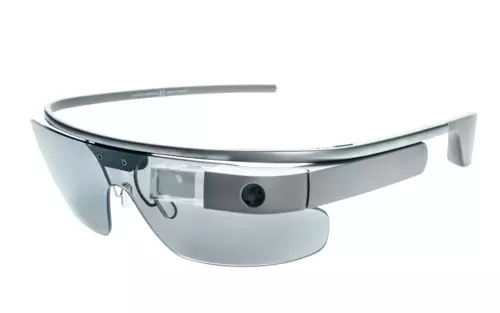
AR Optical Testing System
● Display Clarity & Resolution: Monocular resolution ≥ 2K (pixel density ≥ 600 PPI) to eliminate the screen-door effect; field of view (FOV) ≥ 90° to expand virtual information coverage, with edge distortion ≤ 3% to ensure natural transitions at virtual-real boundaries.
● Luminance & Contrast Balance: Adaptive luminance adjustment (100–1000 cd/m²) matching ambient light. In bright outdoor (100,000 lux) and dim indoor environments, luminance difference between virtual content and real surroundings ≤ 20% to avoid visual incoherence; contrast ratio ≥ 5000:1 to ensure sharp edges for virtual text and icons.
● Optical Transmittance & Color Reproduction: Transmittance ≥ 85% in see-through mode without compromising real-scene visibility; virtual content color accuracy (ΔE ≤ 2) to achieve natural color integration with real objects (e.g., alignment between AR navigation arrows and road surface colors).
● Eye Tracking & Field of View Adaptability: Interpupillary distance (IPD) adjustment range (54–74 mm) to fit diverse users; eye tracking latency ≤ 5 ms to ensure synchronization between virtual focus and line of sight, minimizing motion sickness.
● Long‑Term Usage Reliability: After 4 hours of continuous operation, optical module temperature rise ≤ 10℃ with no luminance degradation (retention rate ≥ 95%); after 1.2‑meter drop testing, no lens displacement occurs to prevent image ghosting.
VR Optical Testing System
VR devices construct an immersive virtual environment, with optical performance focusing on image realism and wearing comfort. Key evaluation points are as follows:
● Core Display Immersion Parameters: Monocular resolution ≥ 4K (PPI ≥ 800) to eliminate screen-door effect; field of view (FOV) ≥ 110° to cover the natural human visual field; refresh rate ≥ 120 Hz, combined with motion-to-photon latency ≤ 20 ms, to minimize motion sickness risk.
● Optical Distortion & Clarity: Edge distortion controlled to ≤ 5% via optical designs such as Fresnel lenses; uniform clarity across the entire field of view (MTF value difference between center and edge ≤ 10%), avoiding the fragmented effect of a clear center and blurred edges.
● Luminance & Color Performance: Peak luminance ≥ 300 cd/m² (≤ 0.1 cd/m² in dark scenes), dynamic contrast ratio ≥ 100,000:1 to restore light and dark layers in virtual scenes; DCI-P3 color gamut coverage ≥ 90% to ensure vivid, realistic colors in the virtual world.
● Pupillary Distance & Visual Adaptability: Supports manual/automatic IPD (Interpupillary Distance) adjustment (accuracy ± 0.5 mm); adapts to 0–600 diopter adjustment for myopic users without additional glasses; binocular image fusion deviation ≤ 1° to avoid stereoscopic ghosting or distortion.
● Ambient Light & Heat Dissipation Impact: Excellent light shielding performance (light leakage rate ≤ 1%) to isolate external light interference; after 2 hours of continuous use, optical module surface temperature ≤ 40℃ with no luminance drift caused by heat generation (fluctuation ≤ 5%).

Long Press to Scan QR Code
Scan QR Code
